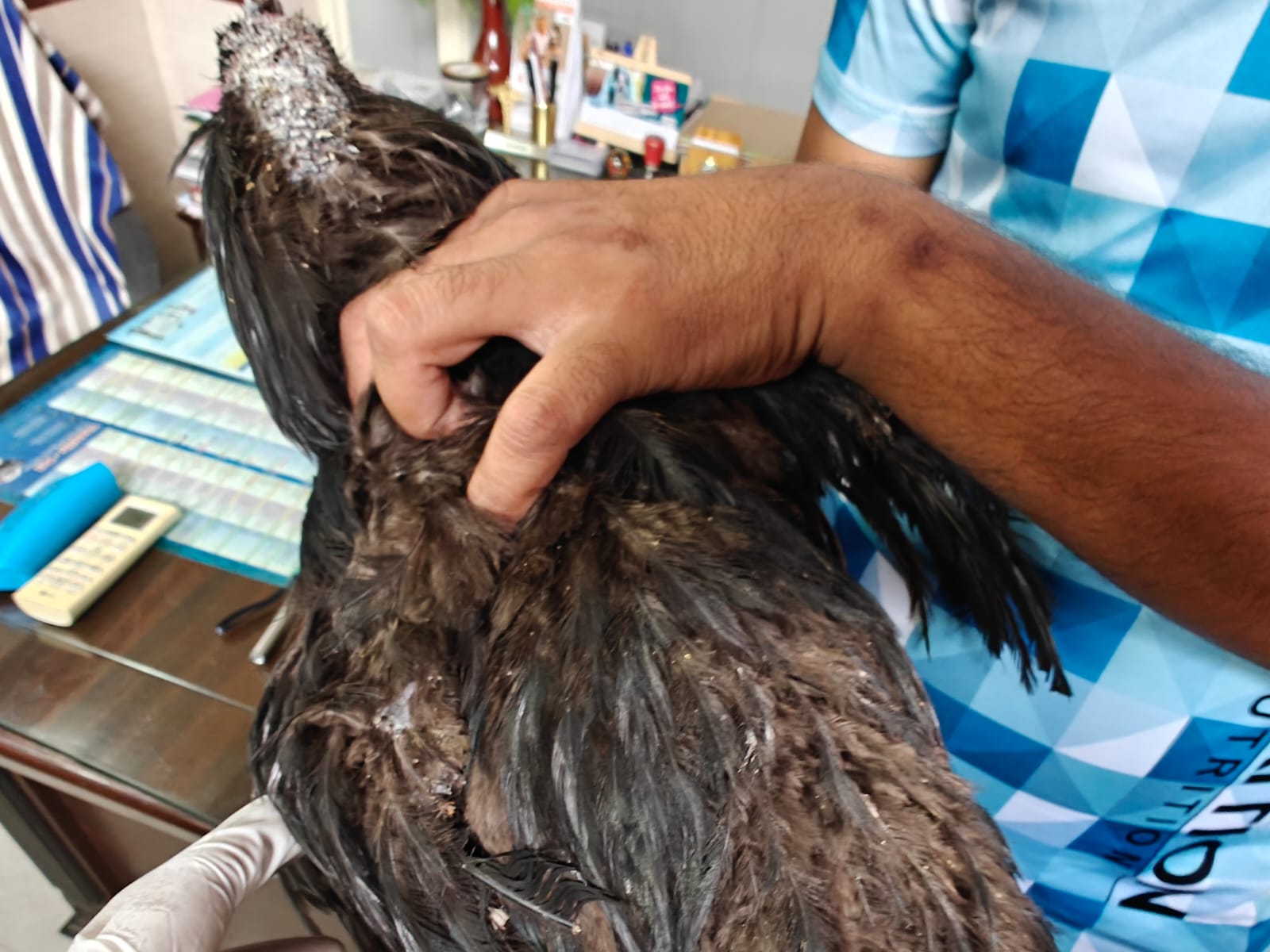


Skin infections in Kadaknath chickens (a native breed of chicken from India) can occur due to various causes, such as bacterial, fungal, or parasitic infections. Like all poultry, Kadaknath chickens are susceptible to skin infections, which can affect their health, growth, and overall well-being. Identifying the cause of the skin infection and providing the appropriate treatment is important to ensure recovery.
Common Causes of Skin Infections in Kadaknath Chickens:
Bacterial Infections:
- Fowl Pox: This viral disease can result in pox lesions on the skin, particularly on the comb, wattles, and beak. The lesions can sometimes become infected with bacteria, leading to secondary bacterial infections.
- Bumblefoot (Pododermatitis): A common bacterial infection that affects the feet of chickens, bumblefoot occurs when bacteria, such as Staphylococcus, enter the skin through cuts or abrasions. This can cause swelling, pain, and the formation of pus-filled abscesses.
- Mastitis: Though more common in mammals, some poultry can develop mastitis, an infection of the mammary glands, but it is rarer in chickens.
- Infected wounds or cuts: Chickens, including Kadaknath, may suffer from cuts, abrasions, or pecking injuries that get infected with bacteria, causing localized skin infections.
Fungal Infections:
- Ringworm: A fungal infection that affects the skin, feathers, and occasionally the comb and wattles. Ringworm can appear as circular patches of scaly, bald skin and can be transmitted by direct contact or contaminated environments.
- Candidiasis (Yeast Infection): This fungal infection is less common in chickens but can affect the skin and mucous membranes, often causing lesions or rashes.
Parasitic Infections:
- Mites (e.g., Scaly Leg Mites): These tiny external parasites burrow under the skin and cause irritation, scabbing, and swelling, especially around the legs, comb, and wattles.
- Lice: Lice infestations can cause itching, feather loss, and scabs. These external parasites can spread quickly and lead to skin infections.
- Fleas: Though rare in poultry, fleas can cause skin irritation and infections when they bite the chicken.
Poor Housing Conditions:
- Wet and Unsanitary Environment: Chickens living in wet, damp, or unsanitary conditions are more prone to skin infections, as bacteria and fungi thrive in such environments.
- Overcrowding: When chickens are overcrowded, they are more likely to injure each other, which can lead to wounds that may become infected.
Nutritional Deficiencies:
- Vitamin Deficiencies: Poor nutrition, especially deficiencies in vitamins like vitamin A, E, and B-complex vitamins, can weaken the immune system and make the chickens more susceptible to skin infections.
- Protein Deficiency: A lack of sufficient protein can also lead to poor feather condition, skin health, and an increased risk of infections.
Symptoms of Skin Infections in Kadaknath Chickens:
- Redness or Inflammation: Affected skin may appear red, swollen, or inflamed.
- Scabs or Crusts: The skin may develop scabs, crusts, or lesions, especially around areas that are injured.
- Hair or Feather Loss: Bald patches or areas of missing feathers can occur, particularly in areas with fungal or parasitic infections.
- Bleeding or Pus: Open wounds may result in bleeding or pus drainage, indicating an infection.
- Itching and Scratching: Chickens with skin infections may scratch or peck at the affected areas due to itching and irritation.
- Lethargy and Reduced Appetite: In more severe cases, the infection can cause the chicken to become lethargic or reduce its food intake.
Diagnosis of Skin Infection in Kadaknath Chickens:
To accurately diagnose a skin infection, it is important to consult a veterinarian. The vet may perform the following:
- Physical Examination: A thorough examination of the skin, feathers, and overall health of the chicken.
- Skin Scraping or Swab: To identify fungal or bacterial infections, the vet may take a skin scraping or a swab from the affected area for testing.
- Blood Tests: In some cases, blood tests may be required to determine if the infection is systemic or if there are underlying issues like nutritional deficiencies.
- Feather Examination: To check for parasites like mites or lice, a feather examination may be conducted.
Treatment of Skin Infections in Kadaknath Chickens:
Bacterial Infections:
- Antibiotics: If the infection is bacterial, the vet may prescribe antibiotics either topically or systemically (oral or injectable) to fight the infection.
- Topical Ointments: Applying antiseptic creams or antibiotic ointments like Neosporin (without pain relief) may help treat localized bacterial infections.
- Cleaning Wounds: Cleaning the affected areas with a mild antiseptic solution (like iodine) will help prevent further bacterial growth.
Fungal Infections:
- Antifungal Medication: If the infection is fungal (e.g., ringworm), antifungal treatments such as miconazole or terbinafine may be prescribed. Topical antifungal creams or oral medication may be required.
- Disinfection: Clean the chicken's environment thoroughly to remove fungal spores and prevent re-infection.
Parasitic Infections:
- Mite Treatments: For scaly leg mites or other external parasites, applying anti-mite sprays or dusting with mite treatments like Permethrin is essential. The chicken's housing should also be treated.
- Flea and Lice Control: If lice or fleas are present, use anti-parasitic powders or sprays that are safe for poultry to treat the infestation.
General Skin Care:
- Moisturizing the Skin: Using skin care products or oils, like aloe vera or vitamin E, may help soothe irritated or dry skin.
- Proper Hygiene: Ensure that the chicken’s environment is kept clean and dry. Regularly clean and disinfect the coop, remove waste, and ensure proper ventilation to reduce the likelihood of infections.
- Nutritional Support: Ensure that the Kadaknath chicken is receiving a balanced diet with the proper vitamins and minerals to support skin and immune health.
Preventing Future Infections:
- Maintain Clean Housing: Keeping the living environment clean and dry is essential in preventing future infections. Ensure there is proper bedding, ventilation, and protection from the elements.
- Routine Parasite Control: Regularly check for parasites such as mites and lice and use preventive treatments.
- Vaccinations: Ensure that your chickens are vaccinated against common poultry diseases to reduce the risk of infections.
- Regular Health Checks: Regularly monitor the chickens for any signs of infection or skin problems to catch issues early.
Prognosis:
With prompt and appropriate treatment, many skin infections in Kadaknath chickens can be resolved. However, the prognosis depends on the severity of the infection, the timeliness of treatment, and the overall health of the bird. In severe or untreated cases, skin infections can lead to more serious complications, such as systemic infection or permanent scarring.
If you notice signs of a skin infection in your Kadaknath chicken, it's best to consult a veterinarian for an accurate diagnosis and treatment plan. Would you like more details on specific treatments or how to maintain proper hygiene in your poultry farm?