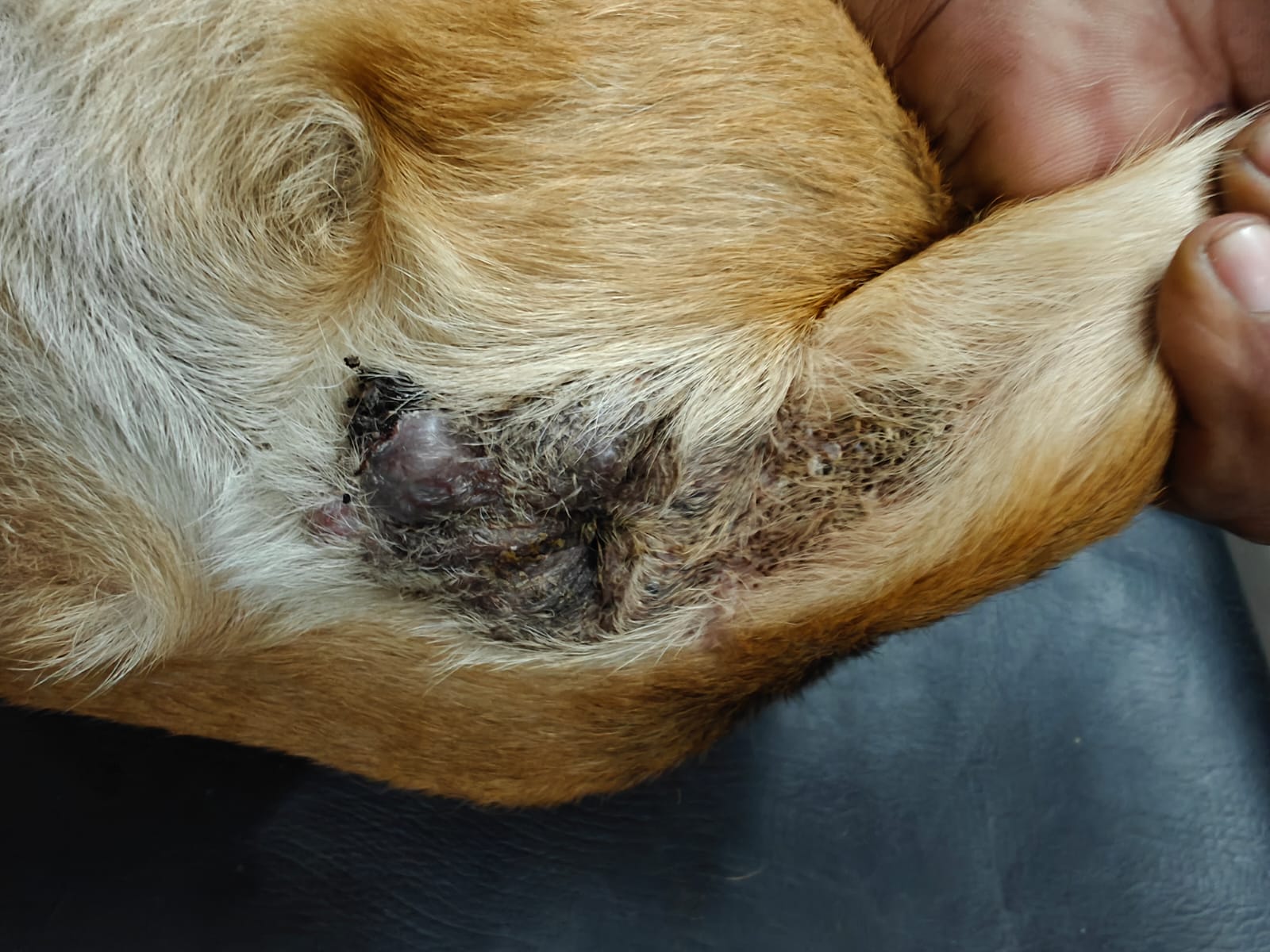


Perianal adenomas in dogs are benign (non-cancerous) tumors that develop from the sebaceous (oil) glands around the anus. These tumors are most commonly seen in older male dogs, particularly those that are intact (not neutered). While they are typically not harmful on their own, they can cause discomfort, difficulty defecating, or complications if they grow too large or become infected.
Key Facts About Perianal Adenomas:
Location:
- Perianal adenomas usually develop in the skin around the anus, where the sebaceous glands are located. These glands secrete oils that help lubricate the skin and hair around the anus.
- The growth is often found on one side of the anus, but sometimes it can appear on both sides.
Common in Intact Males:
- Perianal adenomas are more frequently seen in male dogs, especially those who have not been neutered. The condition is often thought to be related to hormonal influences (testosterone), as these tumors tend to develop in older dogs after puberty.
Characteristics:
- Appearance: Perianal adenomas are usually round or oval, firm, and smooth, with a flesh-colored to dark brown appearance. They may grow slowly and can range in size from small to quite large.
- Growth: These tumors typically grow slowly, but if left untreated, they can become quite large or develop ulcerations (open sores) that may bleed or become infected.
Symptoms:
- Itching or Irritation: The dog may lick, scratch, or bite at the affected area.
- Discomfort: Large or inflamed tumors may cause discomfort or pain, especially when the dog sits or defecates.
- Difficulty Defecating: If the adenoma becomes large enough, it may obstruct the anus, making it painful or difficult for the dog to pass stool.
- Visible Growth: The growth is often visible around the anus, and the dog may have a noticeable lump or mass.
Diagnosis of Perianal Adenomas:
To confirm the diagnosis of a perianal adenoma, your veterinarian will likely:
- Physical Exam: A thorough physical examination, including a close inspection of the anal region, to identify the presence of a growth or lump.
- Fine Needle Aspiration (FNA): A sample of the tumor may be taken using a fine needle to check for cells that indicate whether the tumor is benign or malignant.
- Biopsy: If necessary, a biopsy may be performed to confirm the diagnosis and rule out other possible causes for the lump.
- Blood Work: Your vet may recommend blood tests to assess your dog's overall health and check for signs of infection or other issues.
Treatment of Perianal Adenomas:
Surgical Removal:
- Best Option: The most common and effective treatment for perianal adenomas is surgical removal. The tumor is usually removed along with the surrounding tissue, which helps reduce the likelihood of recurrence.
- Neutering: Neutering (spaying or castrating) the dog may help prevent the recurrence of perianal adenomas, as these tumors are often hormonally driven. If the dog is intact, neutering can lower testosterone levels, reducing the risk of further tumor growth.
- Post-Surgery Care: After surgery, your dog will need to rest and recover, with proper wound care to avoid infection. The veterinarian may prescribe antibiotics or pain relief medications if necessary.
Cryotherapy or Laser Surgery:
- In some cases, veterinarians may use cryotherapy (freezing the tumor) or laser surgery to remove the adenoma, particularly if the tumor is smaller or in a more delicate location.
Hormonal Treatment (In Some Cases):
- For dogs that cannot undergo surgery or for small, slow-growing adenomas, hormonal therapy may be an option. These treatments aim to lower the dog's testosterone levels, which may help slow the growth of the tumor. However, surgery remains the most effective treatment.
Observation:
- In some cases, if the tumor is very small and does not cause any symptoms, the veterinarian may recommend simply monitoring it for any changes. However, if it grows or causes discomfort, intervention will likely be necessary.
Prognosis:
- Benign Tumors: Most perianal adenomas are benign and have a good prognosis after removal. Surgical removal usually leads to a full recovery, and recurrence is uncommon, especially if neutering is done alongside the surgery.
- Recurrence: In some cases, perianal adenomas can recur, especially if the dog remains intact and continues to produce high levels of testosterone.
- Complications: If left untreated, large or ulcerated perianal adenomas can become infected, causing pain, bleeding, and other complications. Prompt surgical removal and post-surgery care are important to avoid these issues.
Prevention:
While there is no guaranteed way to prevent perianal adenomas, neutering your dog at an early age can help reduce the likelihood of these tumors developing, as it lowers testosterone levels, which are believed to play a role in the development of these growths.
Conclusion:
If you notice any abnormal lumps or growths around your dog’s anus, it’s important to have them examined by a veterinarian. Perianal adenomas are treatable and, when caught early, can usually be managed effectively with surgery. Neutering your dog (if it isn't already) can also be an important step in preventing recurrence. If you have any further questions or concerns, don’t hesitate to reach out!