


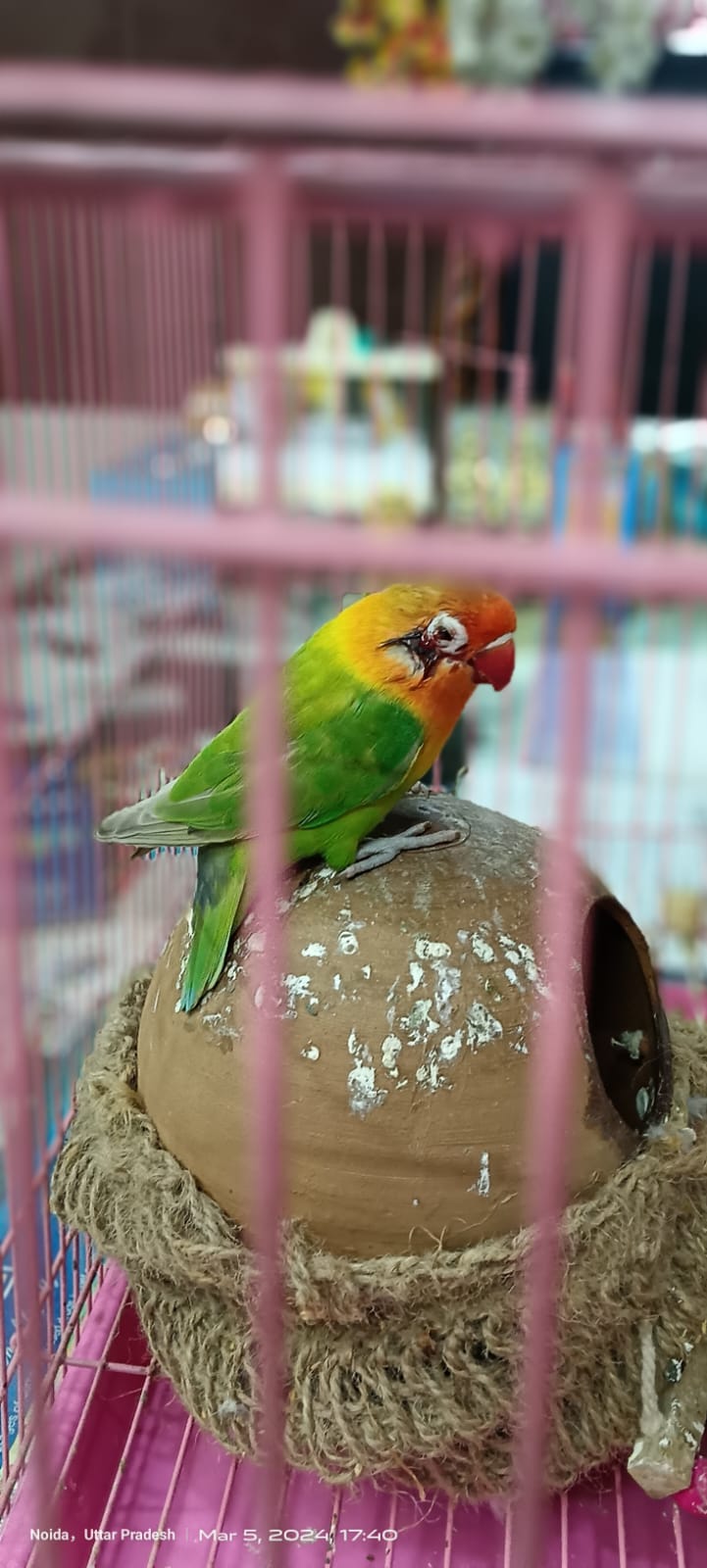
Eye injuries in birds can range from minor to quite serious, so it's important to monitor the situation closely. Here are some things you should consider:
1. Signs of an Eye Injury:
- Swelling or redness around the eye.
- Discharge (watery or pus-like) coming from the eye.
- Cloudiness or a visible scratch on the eye.
- Squinting or closing one eye more than usual.
- Behavioral changes, such as increased irritability or difficulty flying.
- Rubbing the eye or rubbing its face against objects.
2. Possible Causes:
- Trauma from flying into objects, other birds, or even handling.
- Infections (bacterial or viral) can cause discharge and cloudiness.
- Dust, debris, or foreign bodies in the eye.
- Dryness from living in a dry environment.
- Chemical irritants, such as cleaning products or smoke.
3. Immediate Steps:
- Check for any visible debris: If there’s something small in the eye, gently rinse it with saline solution or water (avoid using anything like soap or eye drops meant for humans).
- Limit exposure to irritants: Make sure the bird is in a calm, clean environment.
- Avoid handling the bird too much, as it may cause additional stress or further injury.
4. When to See a Vet:
- If there is significant swelling, discharge, or a visible injury, it’s best to take the bird to a vet as soon as possible.
- Eye injuries can lead to complications, like infections or long-term vision problems, if not treated promptly.
- If the bird seems to be in pain or is having difficulty eating, drinking, or flying.
It's always best to get the bird checked by a vet who specializes in avian medicine, as they can provide the right treatment to ensure full recovery.


