


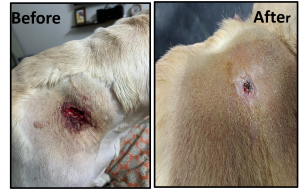
Dog Bite Suppurative Wound in Dogs refers to a wound caused by a dog bite that becomes infected and develops pus. These types of wounds can range from superficial punctures to deep lacerations, and the infection (suppuration) occurs when bacteria enter the wound, leading to inflammation, swelling, pain, and the formation of pus. Dog bites are a common cause of wounds in dogs, and they can lead to complications if not treated properly.
Causes of Dog Bite Suppurative Wound:
- Bacterial Infection: The most common cause of suppuration (pus formation) in dog bite wounds is bacterial infection. Bacteria from the bite, often from the dog's mouth, enter the wound and cause infection.
- Puncture Wounds: Bite wounds are often deep puncture wounds, which can trap bacteria beneath the skin, making them more likely to become infected.
- Trauma and Tissue Damage: The bite may cause tissue damage, bruising, and crushing, which creates an environment where bacteria can thrive and lead to an infection.
- Other Injuries: A bite may also cause underlying damage to blood vessels, nerves, or other tissues, which can complicate the healing process.
Symptoms of Dog Bite Suppurative Wound in Dogs:
- Swelling and Redness: The affected area may become swollen, red, and inflamed as the infection progresses.
- Pain: The dog may show signs of pain when the affected area is touched. The wound may be tender and cause discomfort when the dog moves.
- Pus Discharge: The wound may discharge yellow or greenish pus, a clear sign of infection.
- Fever: A dog with an infected bite wound may develop a fever as the body tries to fight the infection.
- Lameness or Limping: If the bite occurred on a limb or joint, the dog may show signs of limping or reluctance to use the affected leg.
- Loss of Appetite: Infection can lead to general malaise, causing the dog to lose interest in food.
- Lethargy: The dog may appear more tired or less active than usual due to the infection.
- Odor: If the wound is not treated, it may begin to emit a foul odor as the infection worsens.
- Skin Changes: The skin around the wound may appear bruised, necrotic (dead tissue), or develop an abnormal texture as the infection progresses.
Types of Infections That Can Result from Dog Bites:
- Abscess:
- A localized collection of pus, often with a swollen, painful lump under the skin.
- May require draining and antibiotics to treat.
- Cellulitis:
- A skin infection that causes redness, swelling, and tenderness, often spreading from the bite site.
- Requires antibiotics and sometimes drainage.
- Necrotizing Fasciitis:
- A severe, rapidly progressing infection that affects deeper tissue layers and causes tissue death.
- Requires urgent veterinary attention and potentially surgery.
- Osteomyelitis:
- Infection of the bone, which can occur if the bite goes deep enough to damage bone tissue.
- Requires antibiotics and possibly surgery.
Treatment for Dog Bite Suppurative Wound:
Treatment depends on the severity of the wound, the level of infection, and the dog’s overall health. A veterinarian will typically take the following steps:
- Wound Cleaning:
- The wound will need to be thoroughly cleaned and disinfected to remove dirt, debris, and bacteria. This is crucial to prevent further infection.
- The vet may sedate the dog if the wound is painful or if the dog is too stressed to cooperate.
- Drainage (if necessary):
- If there is an abscess or a significant collection of pus, the vet may need to drain the wound. This can involve making a small incision to allow the pus to drain out.
- Antibiotic Treatment:
- Oral antibiotics are typically prescribed to fight the bacterial infection and prevent it from spreading. Common antibiotics for dog bite infections include amoxicillin, clindamycin, or cephalexin.
- In severe infections, injectable antibiotics or a combination of antibiotics may be necessary.
- Pain Management:
- Pain relief, such as nonsteroidal anti-inflammatory drugs (NSAIDs) or opiates, may be prescribed to help the dog manage the discomfort associated with the bite and the infection.
- Tetanus Prophylaxis:
- While tetanus is rare in dogs, if the wound is deep, contaminated, or if the dog is unvaccinated, a tetanus shot may be administered.
- Bandaging or Wound Dressing:
- The wound may need to be bandaged to protect it from further contamination and to promote healing. The dressing will need to be changed regularly.
- Monitoring and Follow-up:
- The veterinarian will monitor the healing process and may schedule follow-up visits to ensure the infection is under control and that the wound is healing properly.
- Surgery (in severe cases):
- If the bite caused significant tissue damage or if the infection has spread deeply, surgery may be necessary to remove necrotic tissue or repair damaged structures.
Complications of Dog Bite Suppurative Wounds:
- Sepsis: A widespread infection that can spread throughout the body. This is a medical emergency and requires immediate treatment.
- Tissue Necrosis: If the infection spreads unchecked, the tissue around the bite wound may die, leading to further complications and requiring surgical intervention.
- Bone Infection: If the bite is severe enough to damage bone tissue, there is a risk of osteomyelitis, a bone infection that can be difficult to treat and may require surgery.
- Permanent Scarring: Severe bites may leave permanent scars or deformities, especially if the wound is not treated promptly or properly.
- Joint or Tendon Damage: If the bite occurs near a joint or tendon, there is a risk of long-term functional impairment.
Preventing Dog Bite Suppurative Wounds:
- Proper Dog Socialization: Ensuring dogs are well-socialized and trained to prevent aggressive behavior can reduce the risk of bites.
- Supervision: Always supervise dogs, especially around other animals, children, or unfamiliar people, to prevent potential bites.
- Prompt Wound Care: If your dog does get into a fight or sustains a bite, make sure to clean and assess the wound immediately. Seek veterinary care to prevent infection.
- Vaccination: Ensure your dog is up to date on vaccinations, including rabies, to reduce the risk of infection from bites.
- Avoid High-Risk Situations: Be cautious in situations where your dog might be more likely to bite, such as during food or toy guarding, territorial behavior, or when your dog is frightened or stressed.
When to Seek Veterinary Help:
- Severe swelling, redness, or heat around the wound, indicating a serious infection.
- Pus or foul-smelling discharge from the wound.
- Lethargy, fever, or loss of appetite in the dog, which are signs of systemic infection.
- Pain or limping that doesn’t improve with rest or basic care.
- Inability to move a limb or joint that was bitten, which could indicate nerve, tendon, or ligament damage.
Conclusion:
A dog bite suppurative wound is a serious condition that requires prompt attention and treatment to prevent infection and complications. If your dog has been bitten by another dog, it's important to clean the wound and seek veterinary care as soon as possible. With proper care and medication, most dogs can recover fully from dog bite wounds, but if left untreated, the infection can spread and lead to more serious health problems.


