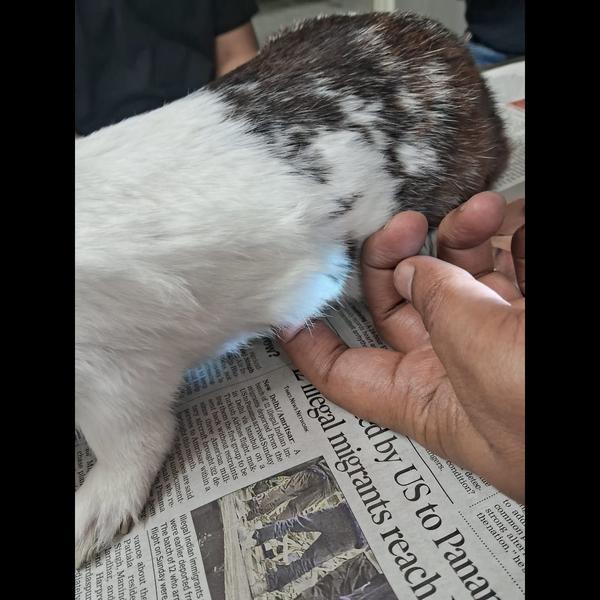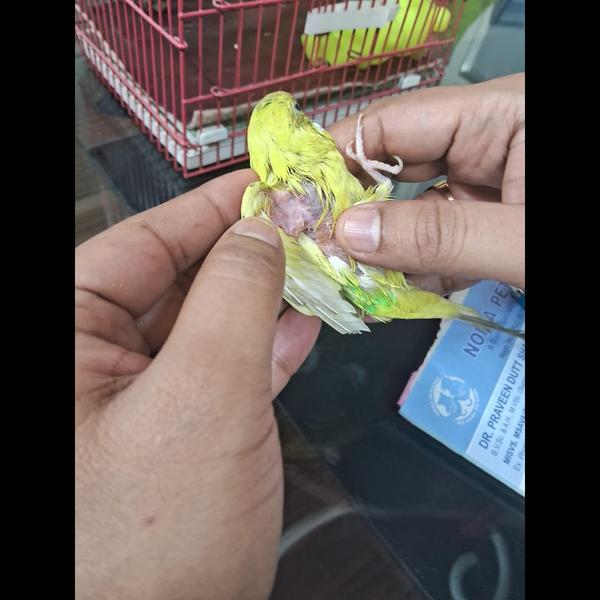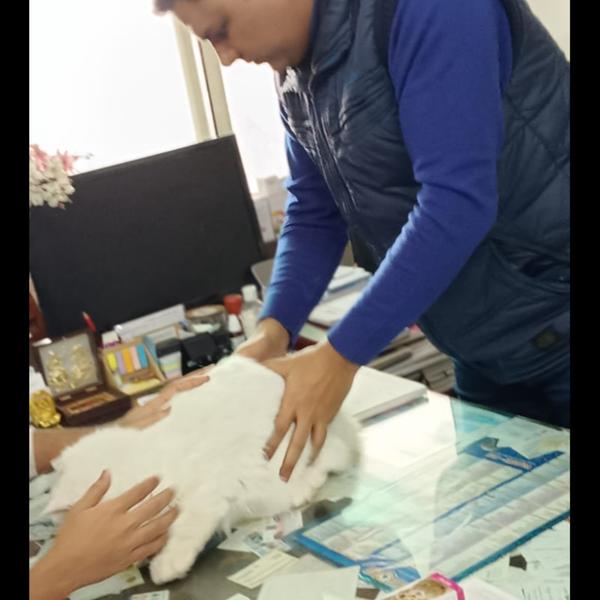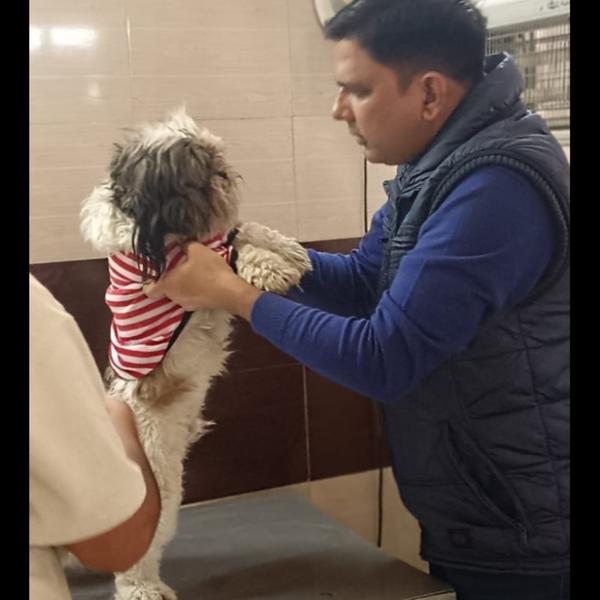


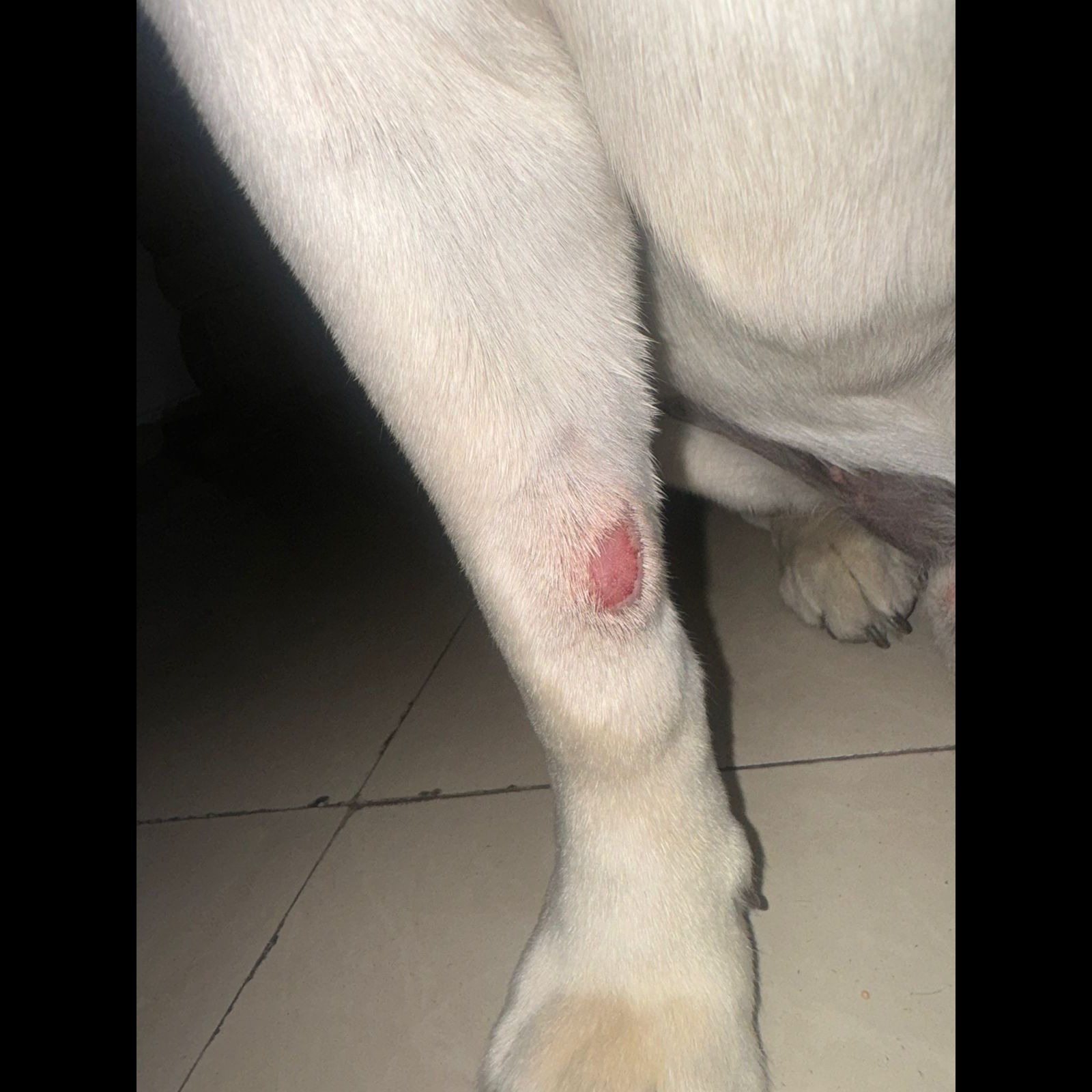
At Noida pet clinic labrador dog was presented with chronic lick issue managed under Dr. P.D SHARMA guidance and care. Here is some more information about the disease.
Lick Granuloma in Dogs (Acral Lick Dermatitis) 🐾
A lick granuloma is a chronic skin lesion caused by repetitive licking — most often on the lower leg (front or hind limb). The constant licking leads to inflammation, infection, and thickened, hairless skin.
🩺 What It Is
A self-inflicted wound where a dog obsessively licks one spot, forming a raised, red, moist, or ulcerated patch that may scab or ooze.
Over time, it becomes thickened, dark, and hairless.
📍 Common Locations
- Front legs (carpal area)
- Hind legs (above tarsus)
- Sometimes flank or foot
⚠️ Causes
Lick granulomas are multifactorial — usually a mix of physical and psychological causes:
🔹 Medical Causes
- Allergies – food, flea, or environmental (common trigger)
- Skin infections – bacterial, fungal, or parasitic
- Joint pain/arthritis – dog licks over painful joints
- Nerve irritation – from spinal or peripheral nerve issues
- Foreign body – splinter, thorn, insect bite
- Endocrine disease – hypothyroidism, Cushing’s disease
🔹 Behavioral Causes
- Boredom or anxiety (especially in intelligent or under-stimulated dogs)
- Compulsive disorder
- Stress, separation anxiety
🔍 Clinical Signs
- Persistent licking at one spot
- Round, firm, raised lesion (ulcerated or hairless)
- Red, shiny, or dark pigmented patch
- May ooze or crust
- Secondary bacterial infection (odor, pus, pain)
- Thickened skin due to chronic irritation
🧪 Diagnosis
- cytology (rule out mites/fungi)
- Culture and sensitivity (to identify bacteria)
- Biopsy (to rule out tumors)
- Allergy testing or food trial
- X-rays if joint or bone pain suspected
- Bloodwork (to check thyroid or systemic diseases)
⚕️ Treatment
Treatment must address both the cause and behavior.
A single therapy rarely works alone — combination approach is best.
1. Medical Treatment
- Topical antibiotics + anti-inflammatory creams (mupirocin, hydrocortisone)
- Oral antibiotics (4–8 weeks for deep infections)
- Pain relief / anti-inflammatories if arthritis involved
- Antihistamines or steroids if allergic
- Thyroid medication if hypothyroid
- Laser therapy or cryotherapy for chronic lesions
2. Behavioral & Environmental Control
- Elizabethan collar (E-collar) or protective sleeve to stop licking
- Increase exercise and playtime
- Interactive toys, puzzles, social engagement
- Reduce anxiety (behavior training, pheromone diffusers)
- Medication for compulsive behavior (fluoxetine or clomipramine – vet prescribed)
3. Topical Management
- Antibacterial washes (chlorhexidine)
- Soothing ointments (aloe vera gel, silver sulfadiazine)
- Bandaging (if tolerated) to protect area
🍖 Home & Supportive Care
- Maintain clean, dry skin
- Prevent boredom (daily walks, mental stimulation)
- Avoid punishment — stress worsens licking
- Balanced diet with omega-3 fatty acids (supports skin health)
Visit Noida pet clinic for these services pet doctor, dog doctor, cat doctor, rabbit doctor, guinea pig doctor, rat doctor, turtle doctor, pet services , boarding, treatment vaccination, grooming, surgery, free online consultation, offers on services, free antirabies for stray camps, discount on products and medicines.