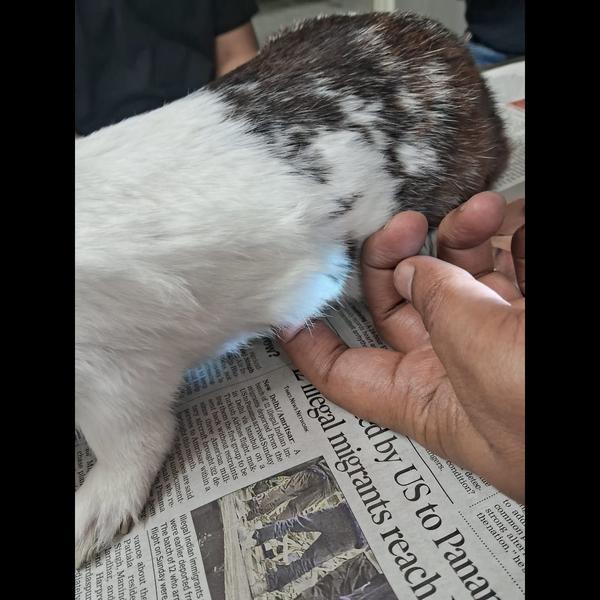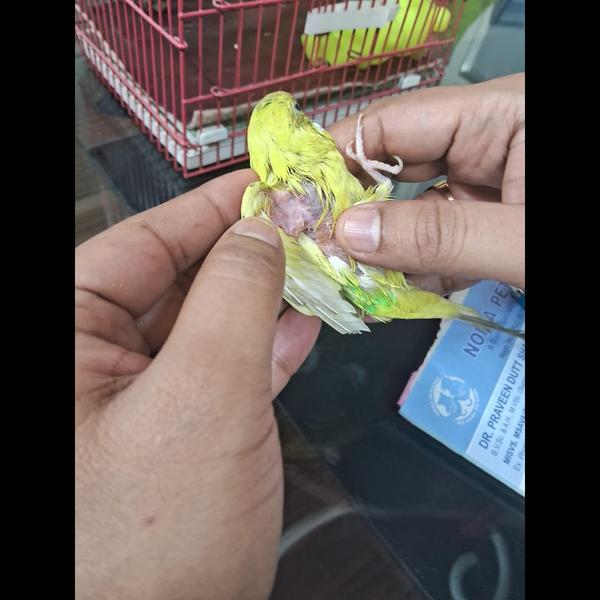


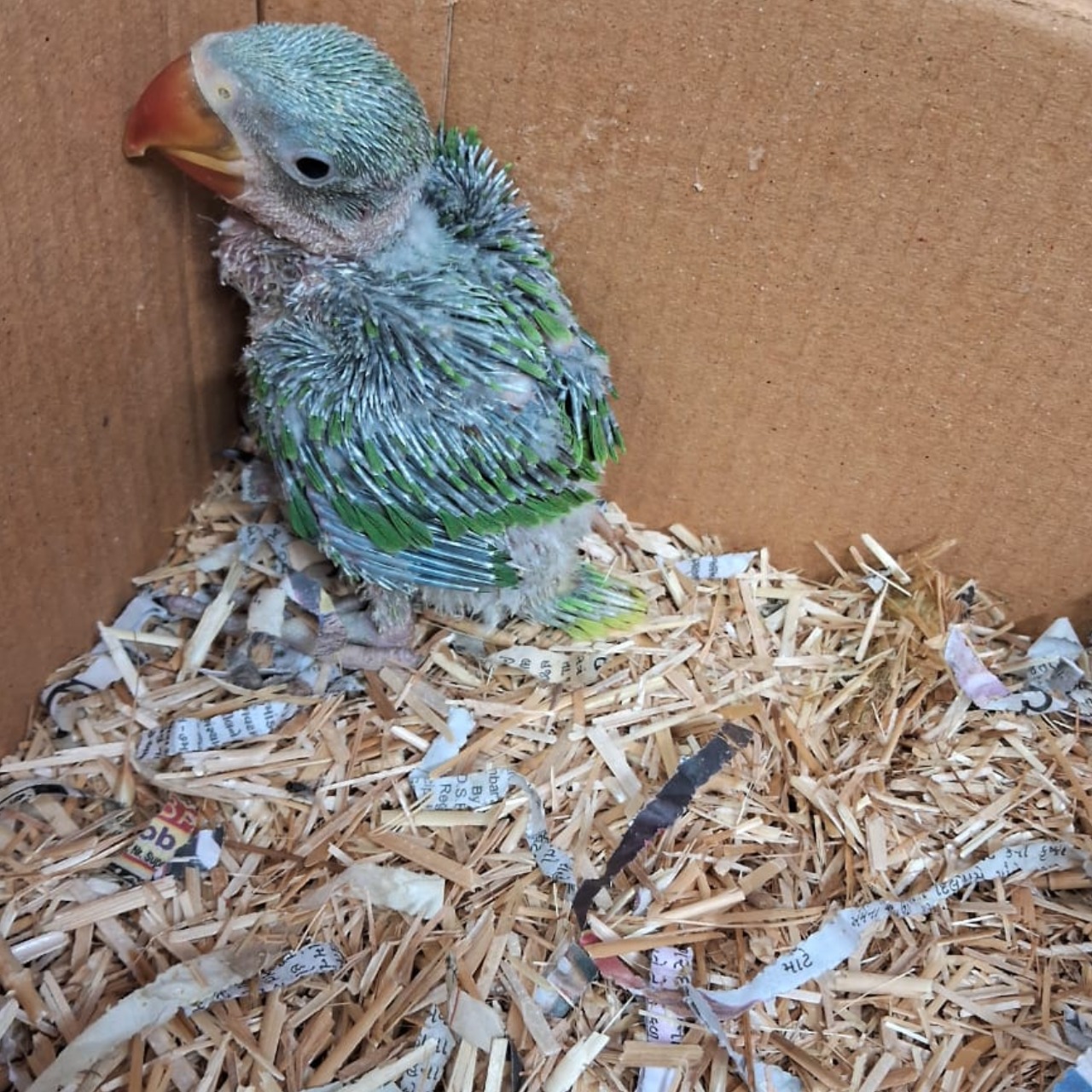
At Noida pet clinic baby parrot was presented with issues regarding upbringing. managed under Dr. P.D SHARMA guidance and care. Here is some more information about the issue.
Caring for a baby parrot (also called a chick or hatchling) requires precision, warmth, hygiene, and patience. Whether it's a hand-raised chick or one you’re assisting from the nest, proper care is essential for healthy development.
🐣 Baby Parrot Care Guide
🍼 1. Age Assessment
Knowing the approximate age helps determine feeding and housing needs:
- 0–1 week: Eyes closed, pink, mostly downless
- 1–2 weeks: Eyes begin to open, some down feathers
- 3–4 weeks: Feathers pin out (sheath stage), more active
- 5+ weeks: Begins exploring, preening, developing tail and flight feathers
🌡️ 2. Brooder Setup (Warmth)
Baby parrots cannot regulate their body temperature.
- 0–2 weeks old: 35–37°C (95–99°F)
- 2–3 weeks: 30–34°C (86–93°F)
- 3–4 weeks: 28–30°C (82–86
- Use a brooder box or plastic tub with a heating pad, heat lamp, or incubator.
- Use a digital thermometer and hygrometer (humidity ~50–65%).
🍽️ 3. Feeding (Hand-Rearing Formula)
Use a commercial hand-feeding formula (e.g., Tropican, Kaytee Exact, Nutribird A19).
- Feed with:
- Syringe (preferred for accuracy)
- Feeding spoon (for older chicks)
- Formula temperature: 38–41°C (100–105°F)
- Feeding frequency (approximate):
- Age Frequency 0–1 week Every 2 hours (even at night) 1–2 weeks Every 3 hours 2–3 weeks Every 4 hours 3–4 weeks Every 5–6 hours 5–6 weeks 2–3 times/day (start weaning)
- Allow the crop to empty fully at least once daily to prevent infection.
⚠️ 4. Hygiene
- Always wash hands before/after feeding.
- Clean syringes, spoons, and brooder after each use.
- Remove uneaten formula within 20 minutes to avoid spoilage.
🧼 5. Health Monitoring
Watch for:
- Crop issues: slow emptying = crop stasis
- Splayed legs, pastiness around the vent, poor weight gain
- Fluffed appearance, lethargy – may indicate illness
Consult an avian vet immediately if problems arise.
🪶 6. Weaning (5–8 Weeks and Older)
Gradually introduce:
- Soft foods: mashed fruits (banana, papaya), soaked pellets
- Then: chopped veggies, seeds, and pellets
- Offer clean water
- Do not force-wean; allow the chick to transition naturally
🦜 7. Socialization & Enrichment
- Start gentle handling after 3–4 weeks
- Talk to the chick, expose to normal household sounds
- Avoid overstimulation
- Introduce toys once the bird can perch
✅ Checklist: Essentials for Baby Parrot Care
- Brooder box with heat source
- Hand-rearing formula
- Syringe or spoon for feeding
- Thermometer for formula and brooder
- Kitchen scale (weigh chick daily)
- Soft bedding (paper towels, cloth)
Visit Noida pet clinic for these services pet doctor, dog doctor, cat doctor, rabbit doctor, guinea pig doctor, rat doctor, turtle doctor, pet services , boarding, treatment vaccination, grooming, surgery, free online consultation, offers on services, free antirabies for stray camps, discount on products and medicines.
best discount pet clinic pet hospital pet shop free healthcare insurance services for dog cat bird rabbit guinea pig rat turtle in indirapuram vaishali south delhi gaur city gurgaon greater noida extension near me . Contact 9811716368, 9350129753